Choose by clue type: destinations, airlines, or codes
Choose AirportQ to read a destination map, AirlineQ to work backward from a carrier lineup, or the airport-code quiz to practice IATA abbreviations with city and country context. The answer in both AirportQ and AirlineQ is an airport; only the clue type changes.
AirportQ: find the missing hub in the spokes
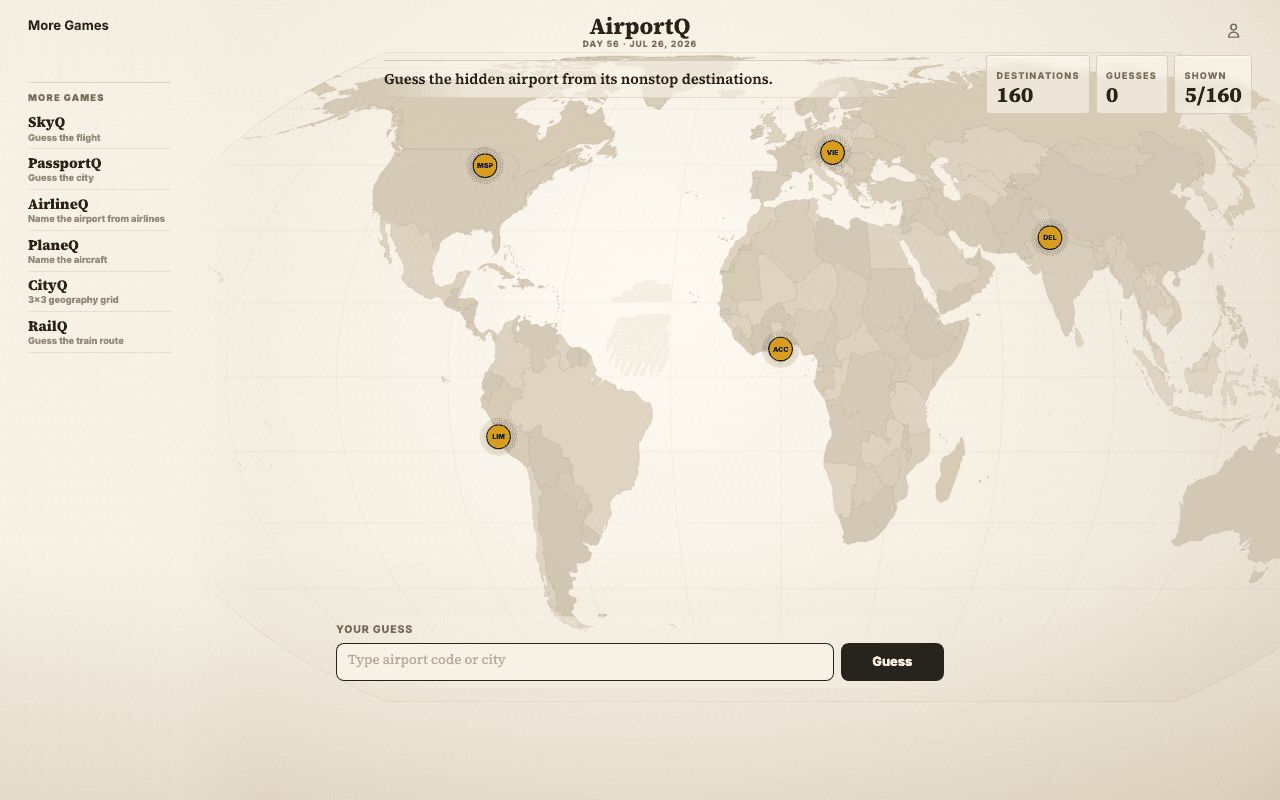
AirportQ hides the central airport and plots a few of its real nonstop destinations. A domestic spoke pattern, transatlantic fan, island-hopping network, or long-haul hub shape can identify the missing center. Every wrong airport guess returns distance and direction feedback and unlocks five more destination routes.
AirlineQ: reverse the airline lineup
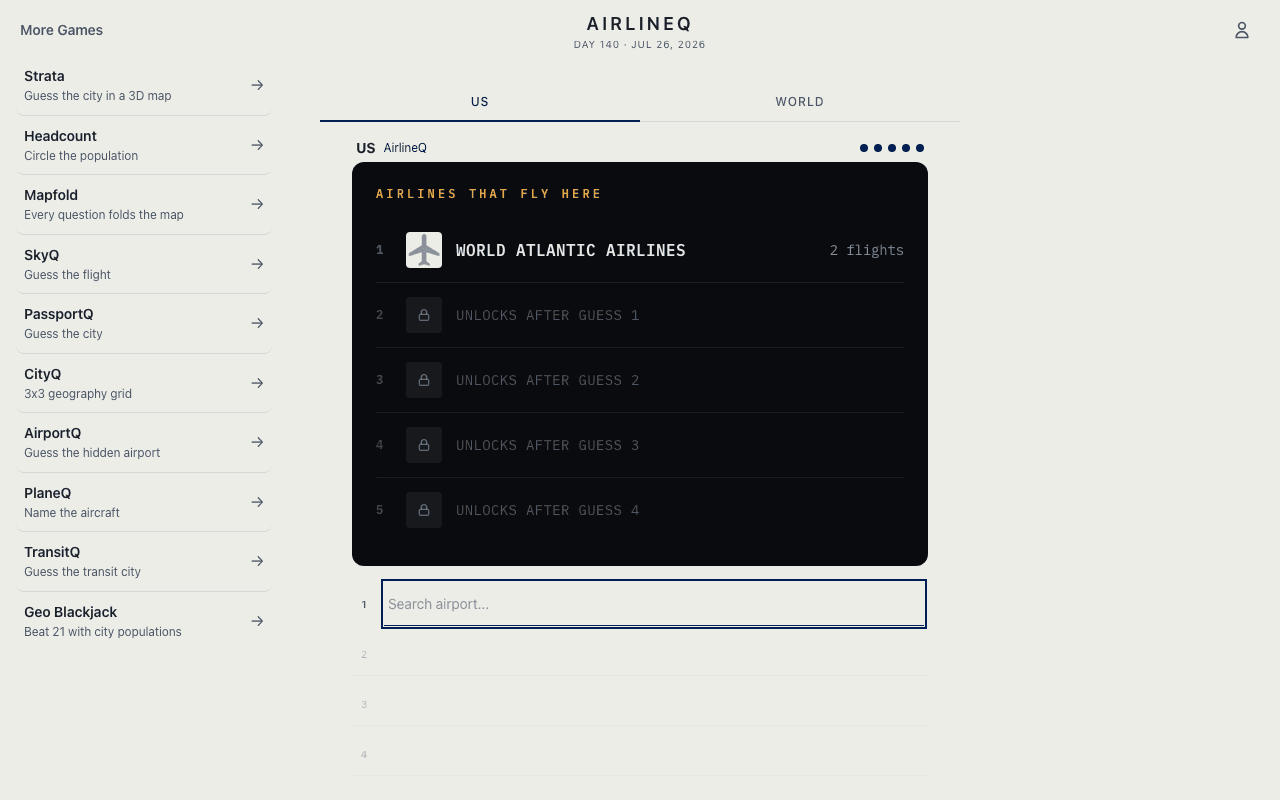
AirlineQ shows one real airline serving the hidden airport, including its flight count. Each miss reveals another carrier and gives distance feedback. You are not guessing the airline: you are naming the airport that best explains the growing airline mix.
Airport-code quiz: connect the code to a place
The airport-code quiz focuses on three-letter IATA codes, but names, cities, countries, and airline context keep it from becoming a list to memorize. Codes help experienced players move faster in AirportQ and AirlineQ, while route and carrier clues keep both games accessible without them.
How the route data becomes a fair puzzle
The games use real commercial airports, nonstop destinations, and airline-service patterns. Clues are progressive: distinctive information appears early enough to support reasoning, and additional routes or airlines arrive after misses. Service changes over time, so the puzzle is about a coherent network snapshot rather than a promise that every route operates forever.