Guess two endpoints, not a train model
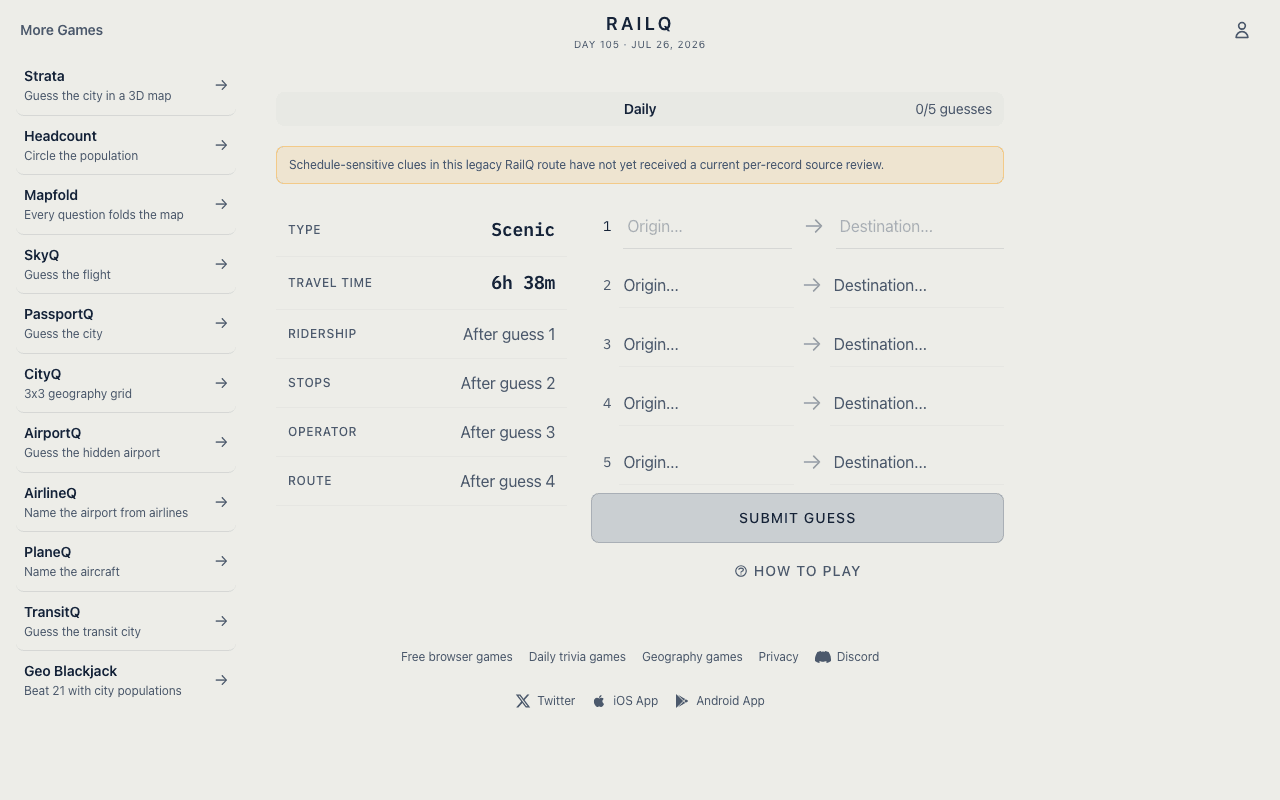
Each guess is a pair of cities at the ends of a real passenger service. A correct train family or operator is not enough; solve both the origin and destination. That keeps the page focused on train-route geography while Train Wordle owns the daily five-guess framing.
Clues reveal in a fixed order
Service type and total travel time are visible before the first guess. Wrong guesses then unlock annual ridership, number of stops, operator, and the actual route geometry. The sequence moves from network scale to increasingly specific operational evidence.
Routes from Amtrak to Shinkansen
The route pool spans high-speed, intercity, regional, commuter, and sleeper services across Japanese, European, British, Indian, Chinese, and North American networks. Travel time and stop count matter more than memorizing one country's timetable.
RailQ vs. RailPass and TransitQ
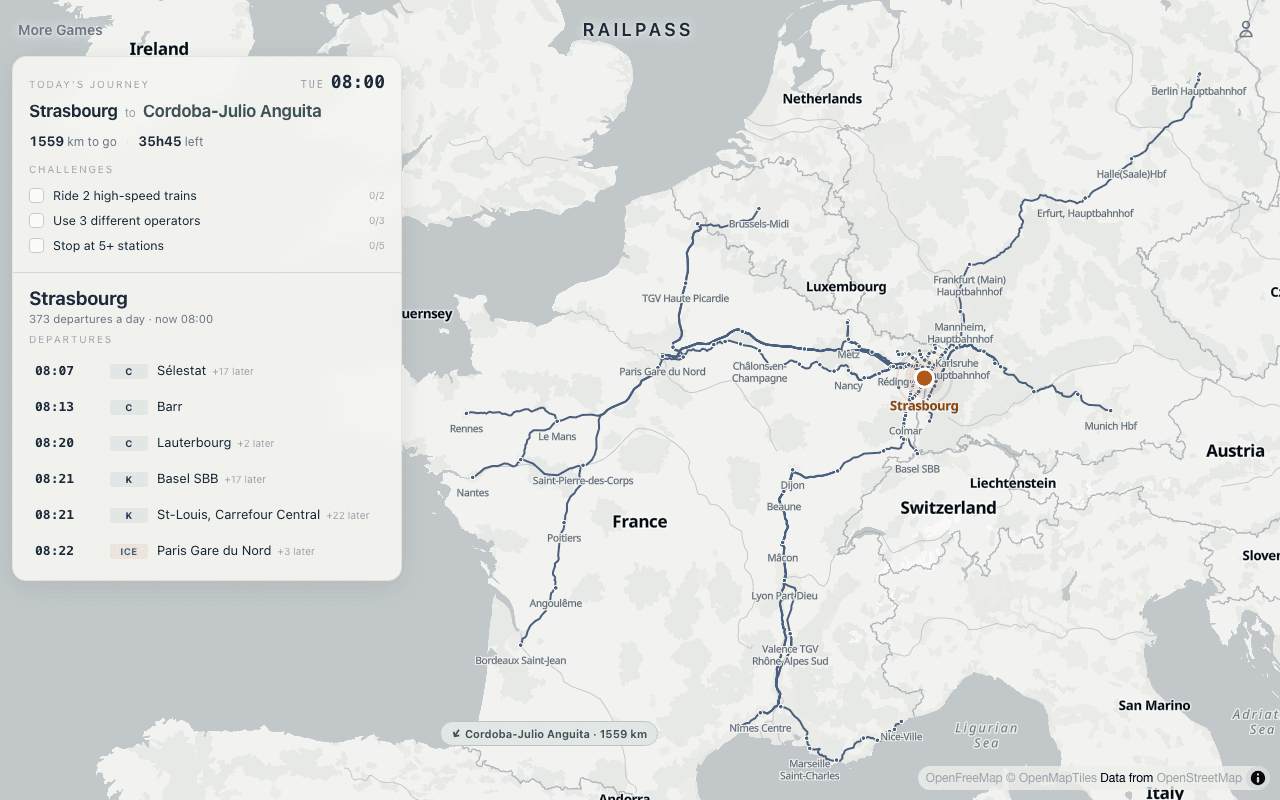
RailQ is route identification: name the two endpoints from clues. RailPass is journey planning: read real European departure boards and build a path before a deadline. TransitQ is city identification: recognize one unlabeled metro line as map layers appear. They share rail geography but not search intent.