
Inspect the dossier
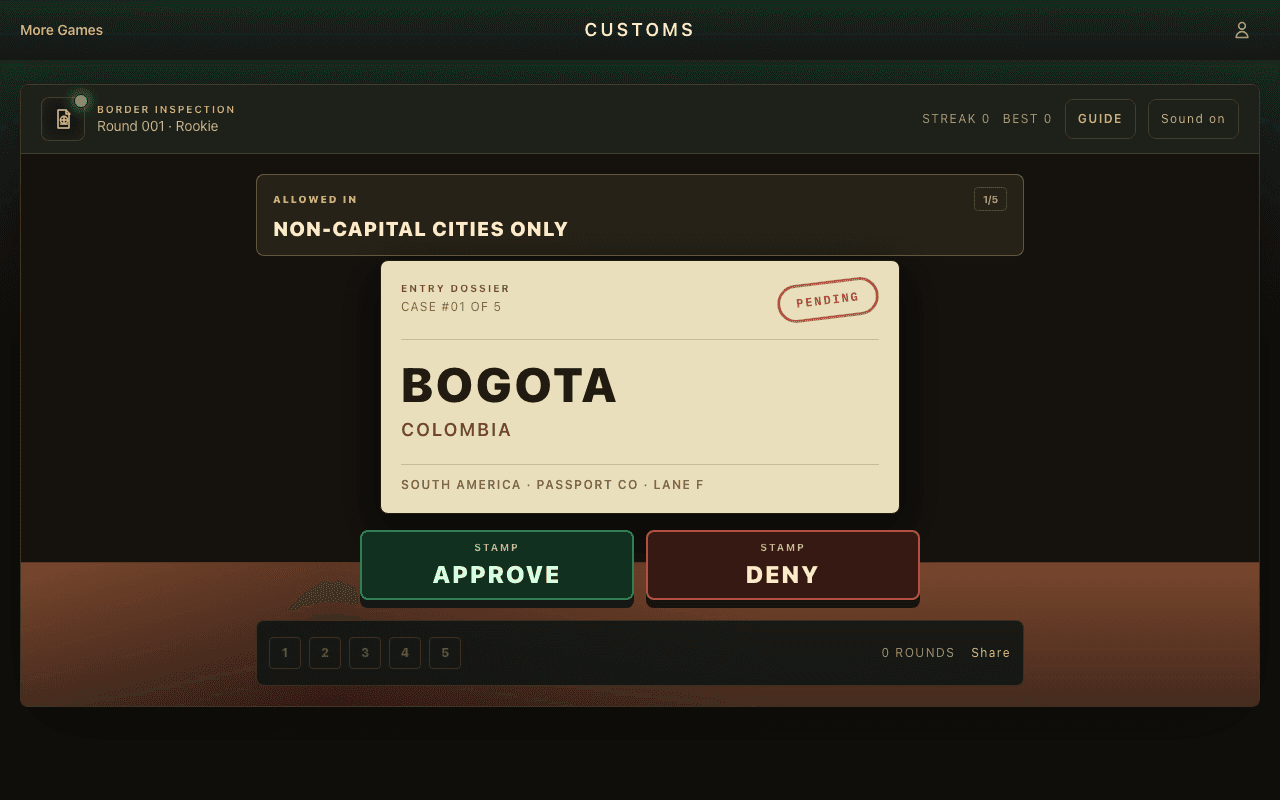
Each entry points to a city and enough context to make a decision. The skill is connecting the dossier to real geography before stamping.
Apply the posted rule
The game is not about memorizing a fixed answer list. The rule changes, so you have to adapt your reasoning from round to round.
Approve or deny
A binary stamp keeps the pace quick. There is no partial credit: either the city satisfies the rule or it does not.
Why the theme helps
The customs desk makes geography feel procedural. You are not naming facts in a vacuum; you are using them to make a decision.
Border control, border deduction — same game
Players search for this format under several names: border control game, border deduction game, customs officer game. They all describe the same loop. The deduction framing is the most accurate one, because the real puzzle is not the stamping — it is inferring the hidden rule. The rule shifts between rounds, from capitals to coastlines to islands to regional facts, so memorizing one answer list is less useful than understanding how each city actually sits on the map. Approve-or-deny is binary, but the reasoning behind each stamp can be subtle, and that tension is what makes Customs a logic game rather than a trivia quiz.