
One rule, real borders
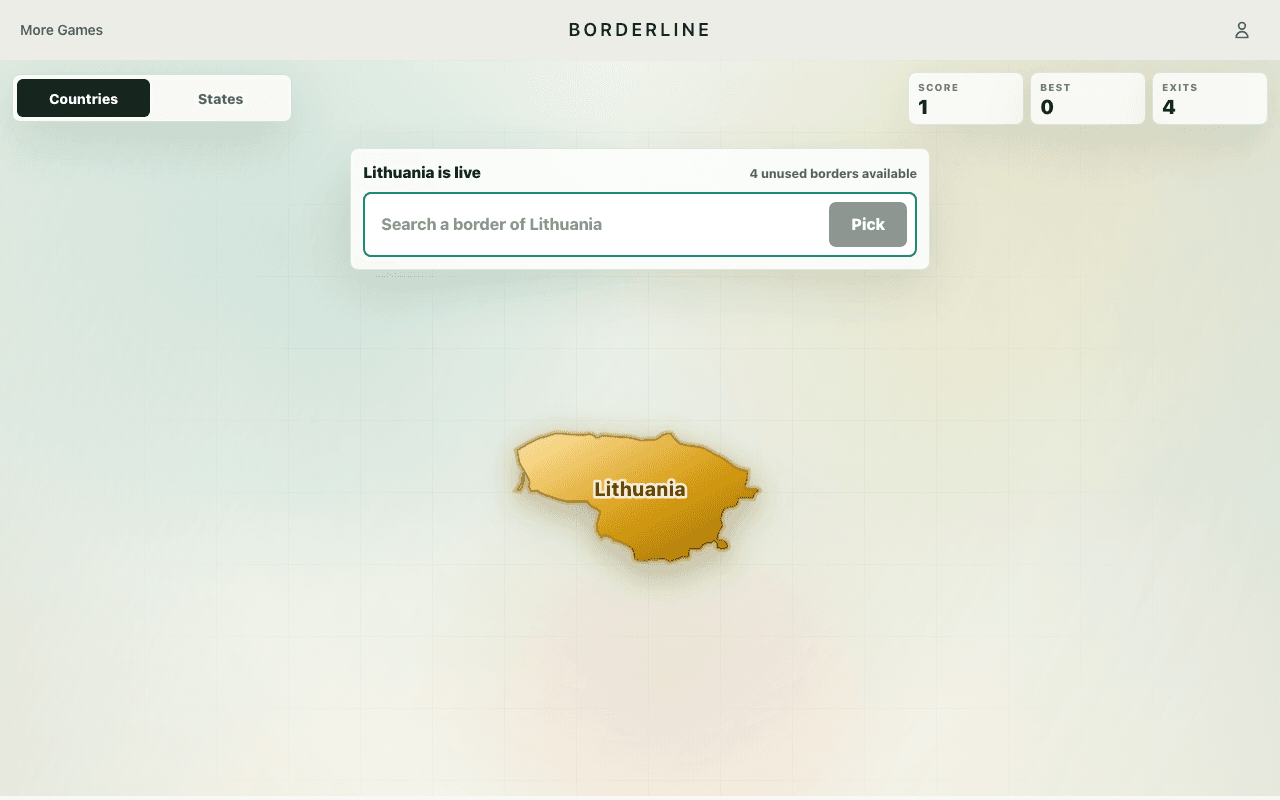
Each turn you name a country that borders your previous answer, and you can never reuse a country. That is the whole rule set, but the world map makes it a strategy game: chain into a peninsula or an island-adjacent corner and you are betting the run on a jump — after a dead end, only the single closest unused country keeps you alive. Long chains come from treating the map like a road network: stay on well-connected continental interiors and save the dead-end branches for when you can afford the gamble.
The map fills in as you play
Every valid answer paints onto the map, so your chain becomes visible geography rather than a list of names. You can watch the route you are carving across a continent, see the regions you have burned, and spot — usually one answer too late — the moment you traded a live continent for a cul-de-sac.
Overseas borders are legal, and they matter
Borderline counts sovereign land borders wherever they exist, including the ones created by overseas territory. Those are the escape hatches that separate good runs from great ones: a chain that looks trapped on one continent can jump somewhere unexpected through a border most players forget exists. Learning those edges is half the fun of the format.
US states mode and what to play next
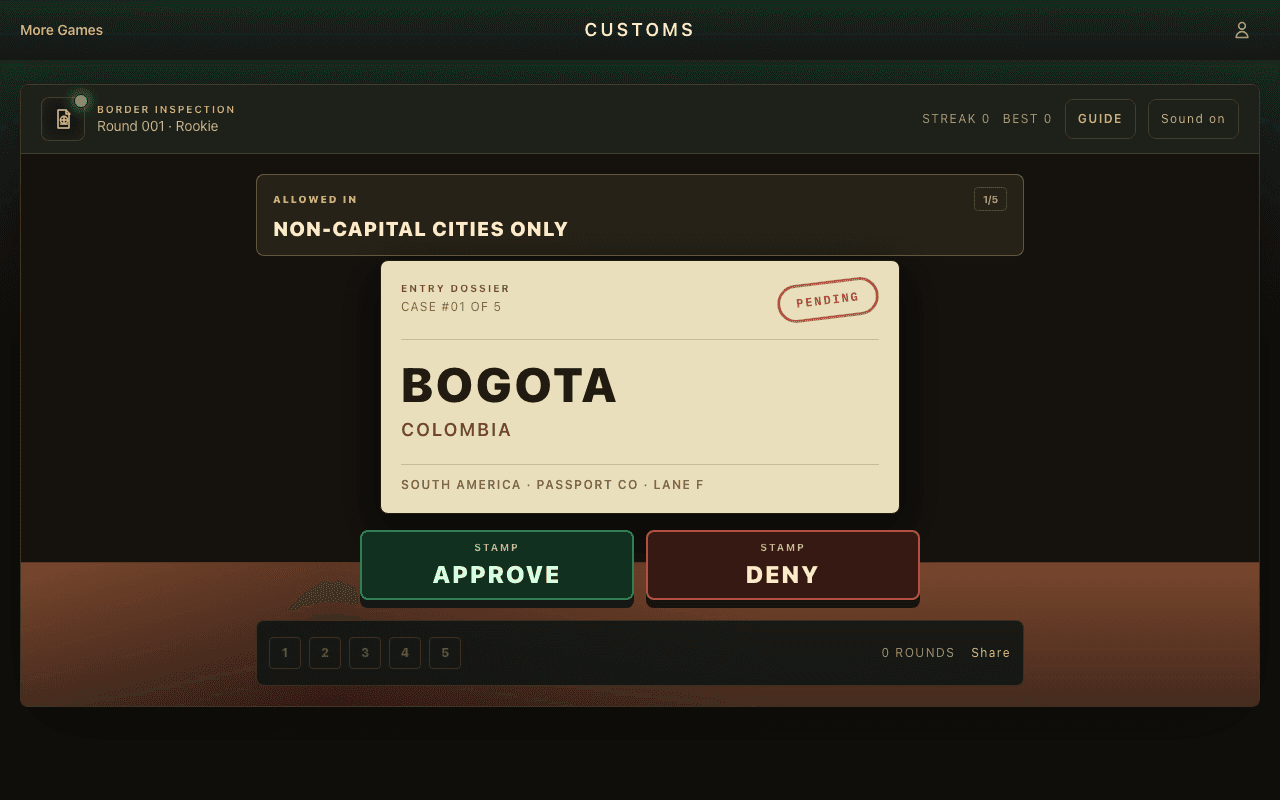
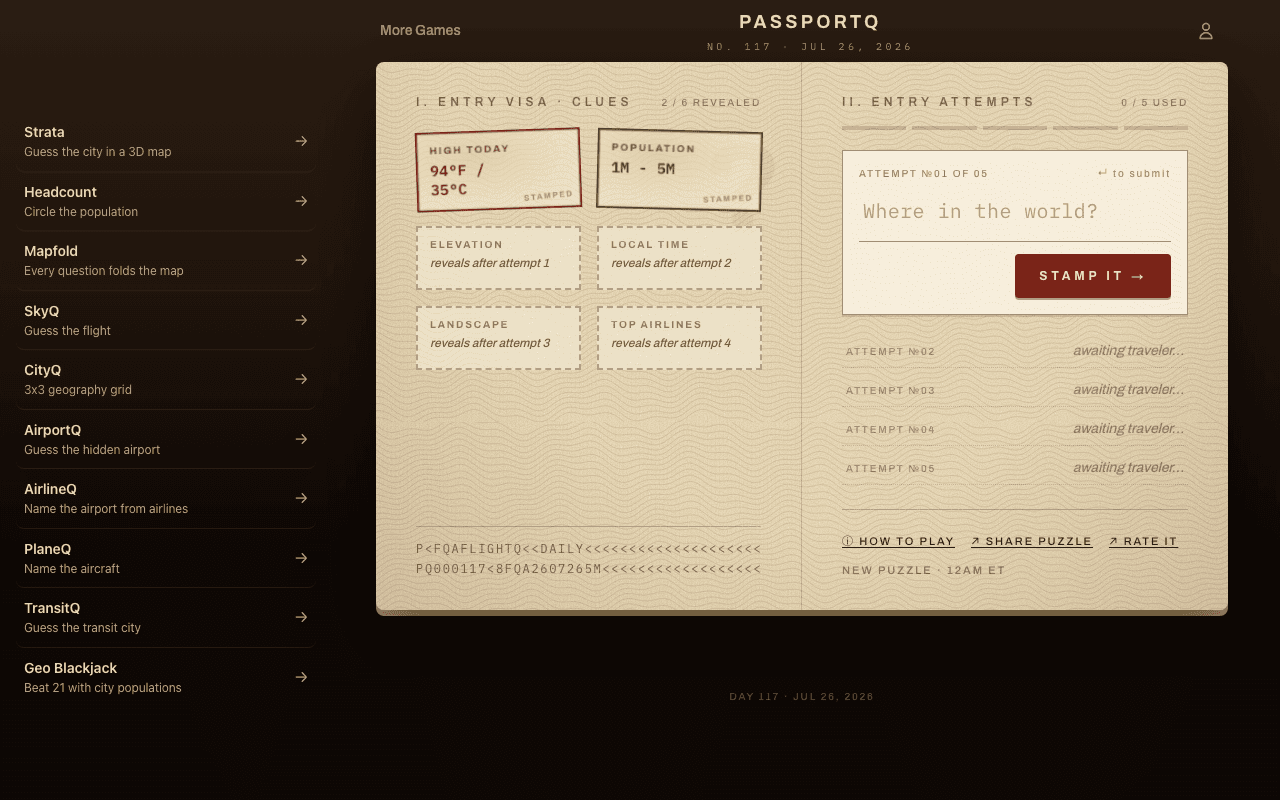
A second mode applies identical rules to US states, which plays tighter — fewer nodes, harsher dead-ends, and the four-corners region doing a lot of work. When a run ends, the same border knowledge feeds FlightQ's other geography games: Customs asks you to deduce a hidden geography rule at a border desk, Outsider hides an odd one out among five places, and PassportQ turns the whole world into a single mystery-city deduction.