
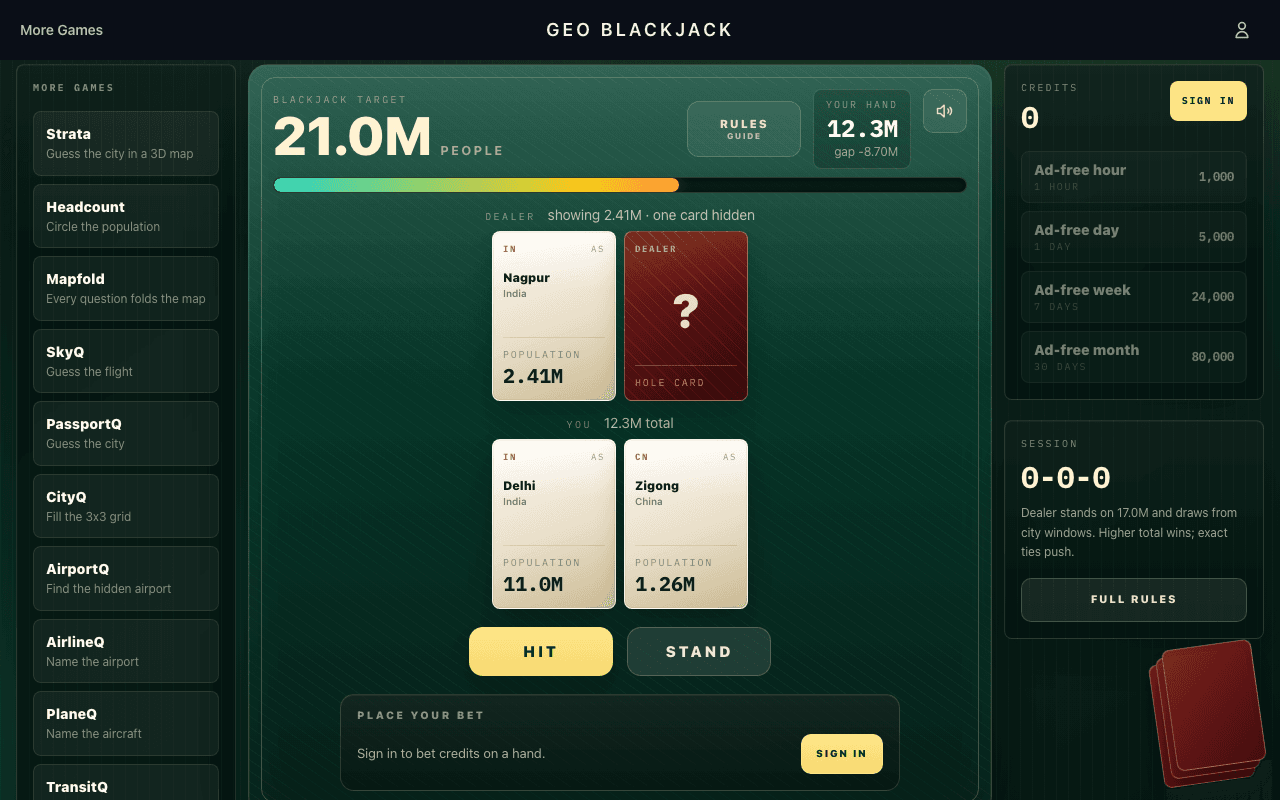
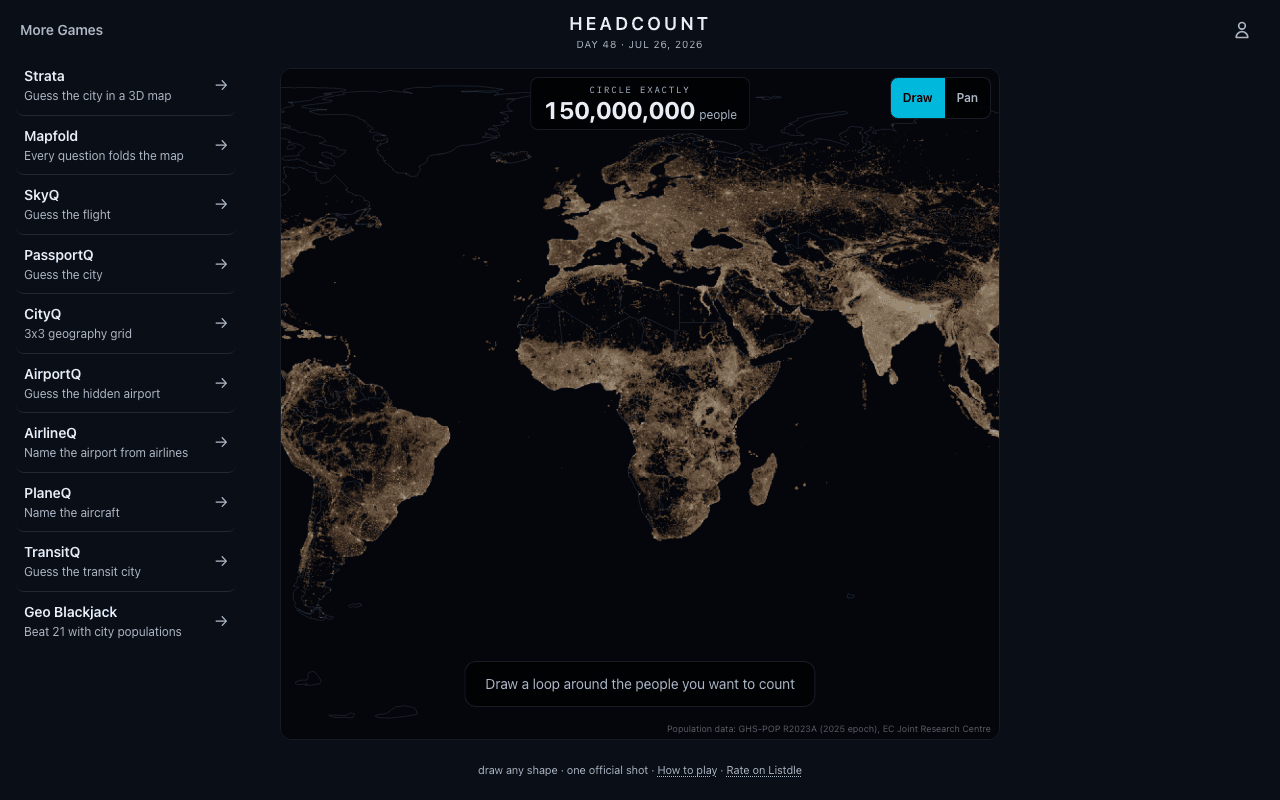
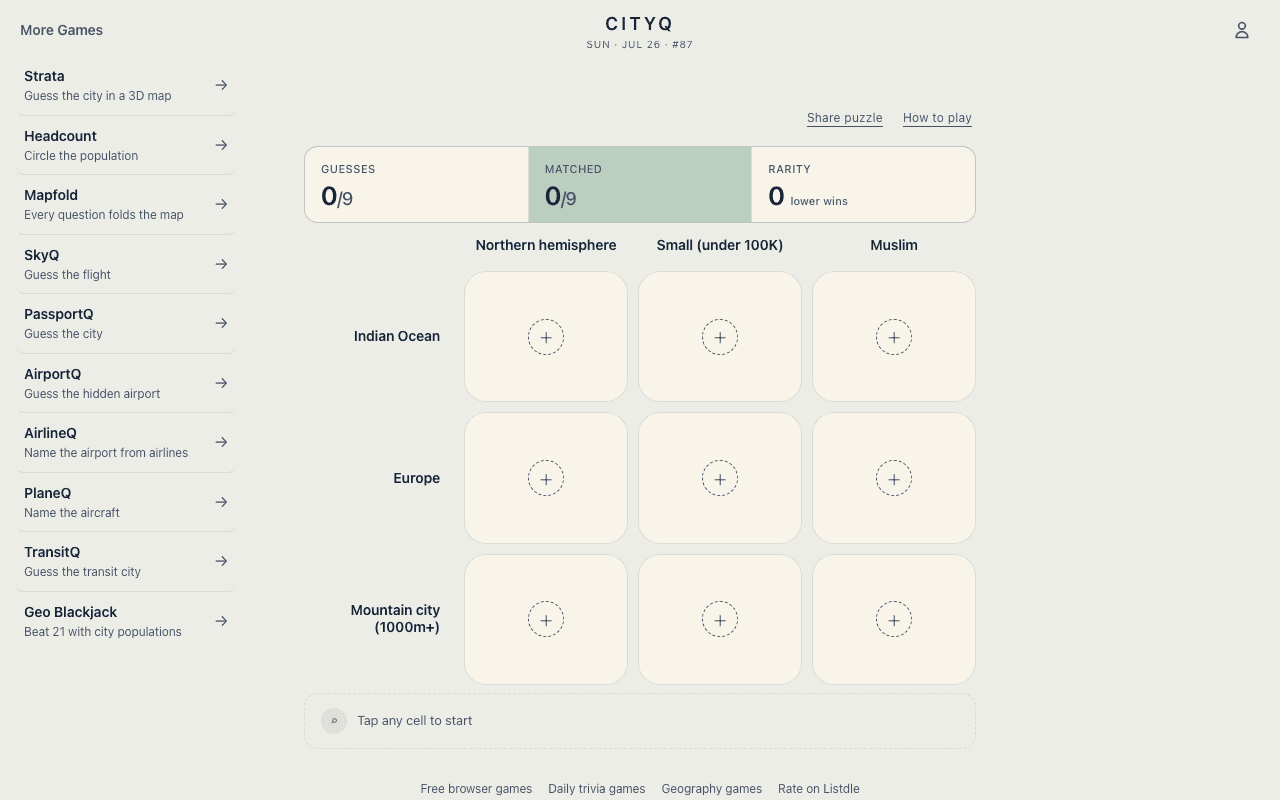
Five city-comparison modes
Choose population, elevation, age, distance from the equator, or today's high temperature. The visible city supplies the benchmark; decide whether the next city's hidden value is more or fewer, higher or lower, older or newer, farther or closer, or hotter or cooler.
What more and fewer mean in each mode
Population compares the consistent city population used by the game. Elevation means height above sea level; age compares founding years; equator distance uses absolute latitude, so north and south count equally; temperature compares today's forecast high rather than a permanent climate average.
Build a longer streak
Start with anchor facts instead of false precision: recognize megacities, high plateaus, ancient settlements, tropical latitudes, and obvious weather gaps. As the cities get closer, use the revealed value from the previous round as the next benchmark. One wrong answer ends the endless run.
Where the comparison data comes from
HigherQ uses transparent city facts for population, elevation, founding year, and coordinates, plus current forecast data for temperature mode. Population boundaries and historical founding dates can be defined differently by different sources, so the game applies one consistent definition within each comparison.