Pathfinding on real networks
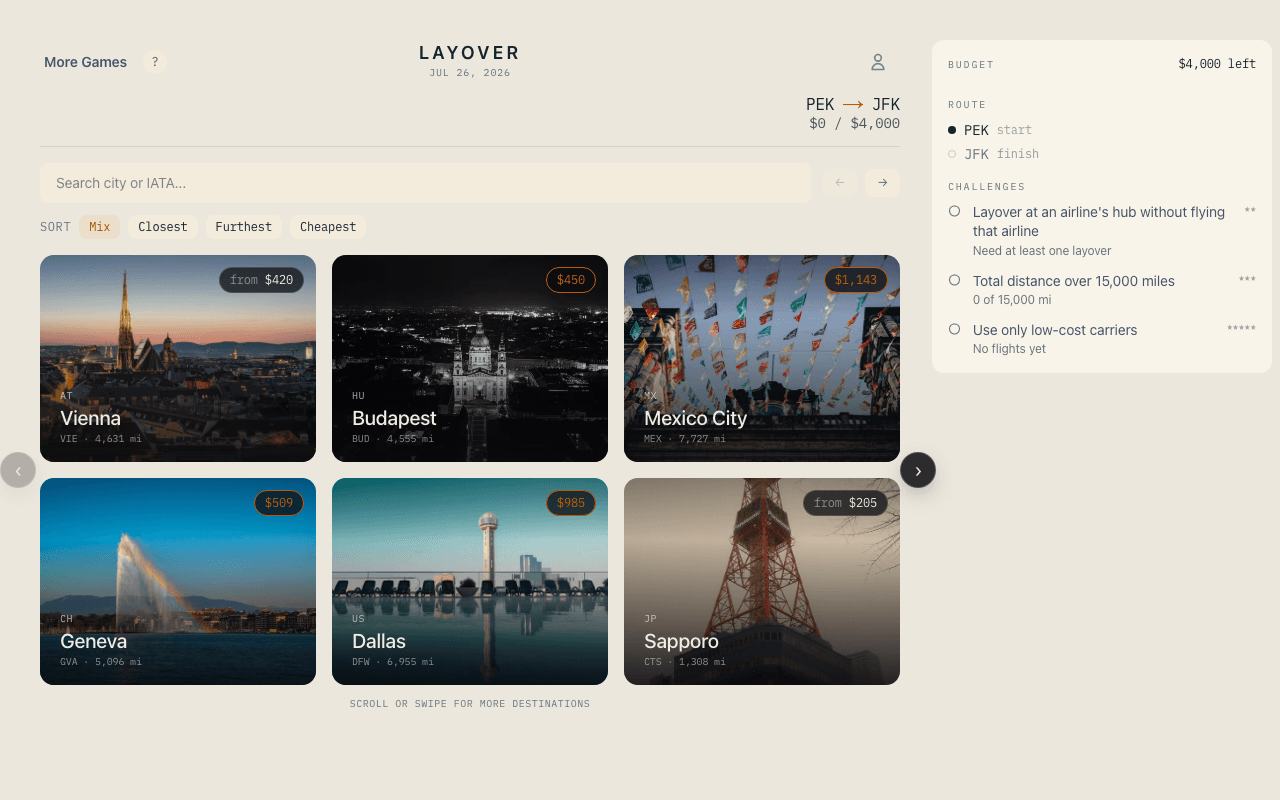
Travle's map is political — countries and shared borders. Layover swaps in the network that actually moves people: scheduled flights. The day's challenge gives you constraints (regions to touch, budget, stops) and you assemble a working itinerary from real connections. The shortest path on an airline network is rarely the one geography suggests, which is exactly what makes it interesting.
Efficiency as the score
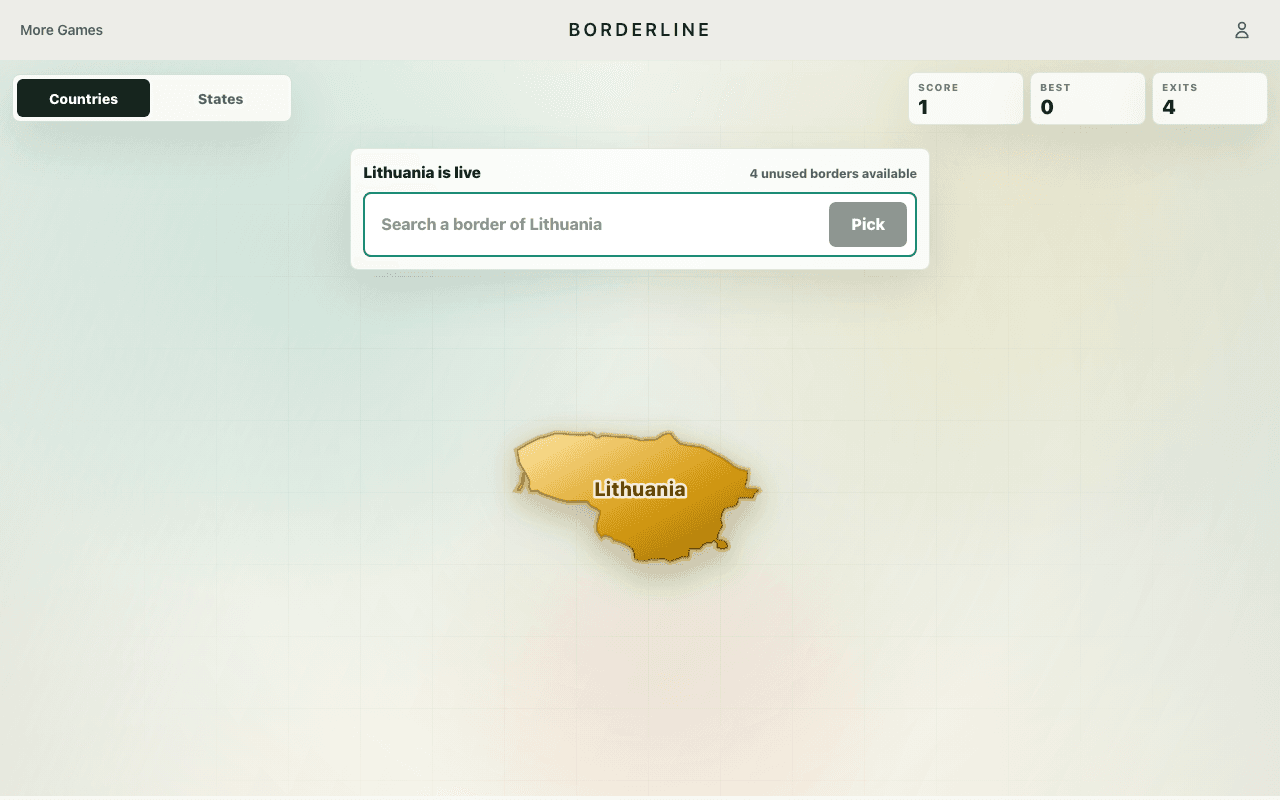
Borderline plays on the same map Travle does — real land borders. Every answer must share a border with the last one, no repeats — and when you trap yourself in a dead end, survival hangs on naming the closest unused country. The 'one hop deeper exists, find it' compulsion is the same.
When the route IS the puzzle
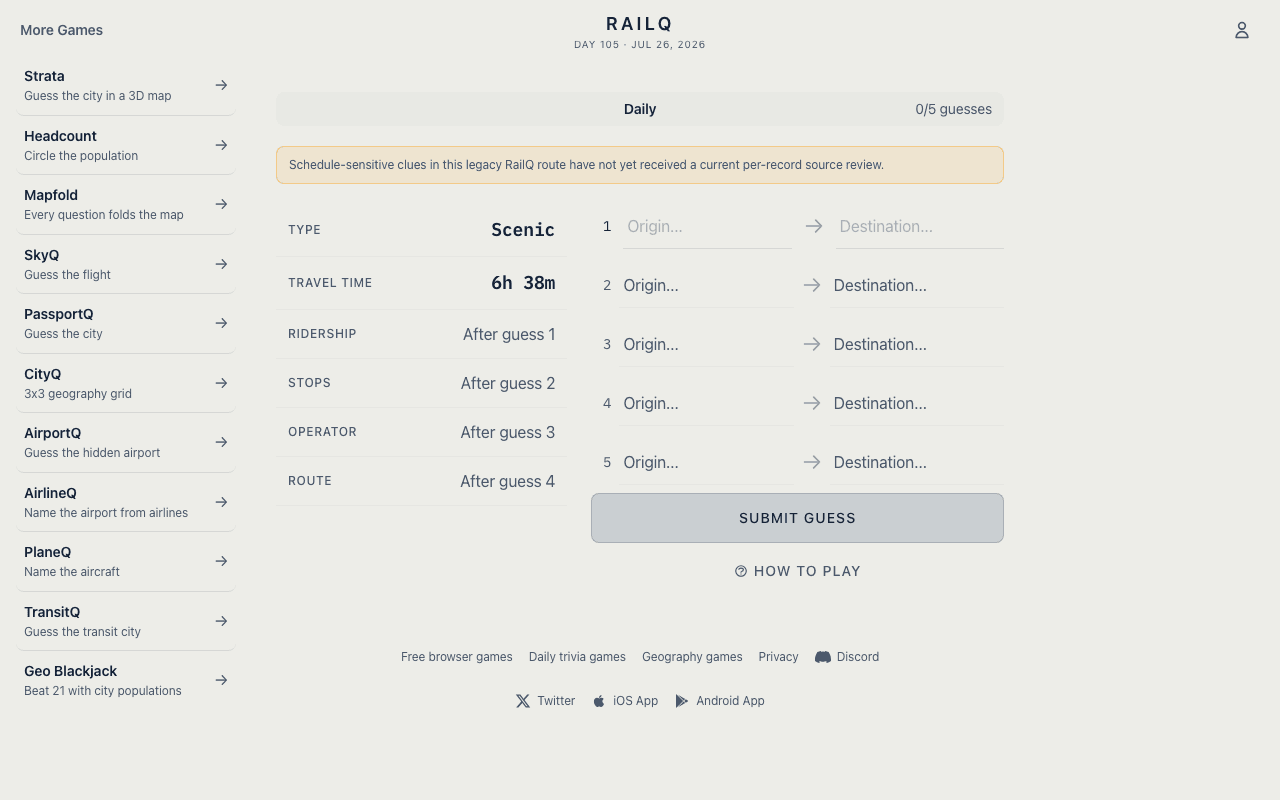
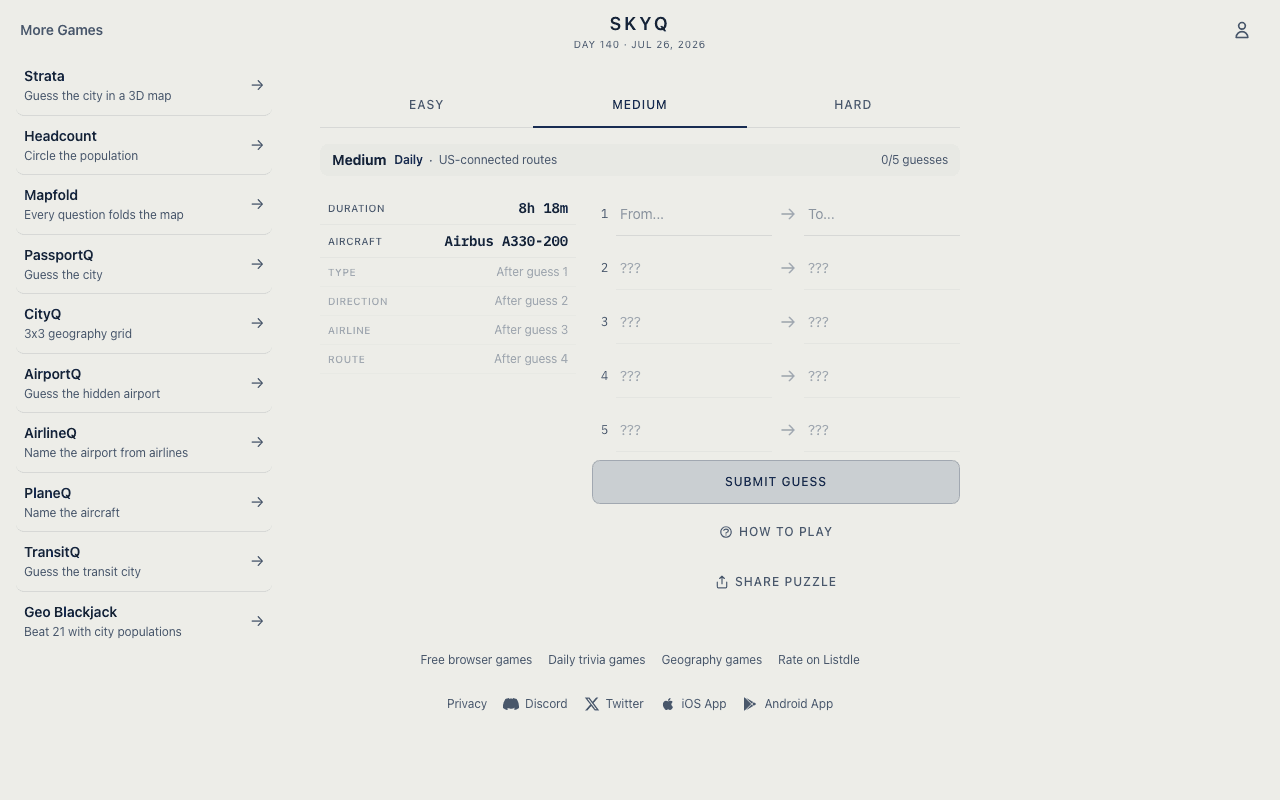
RailQ inverts the format: instead of building the path, you deduce one. A real train route is hidden behind clues — travel time, stop count, ridership, operator — and you reconstruct where it runs. SkyQ does the same for flights. If Travle taught you to think in connections, these reward reading a network backwards.